

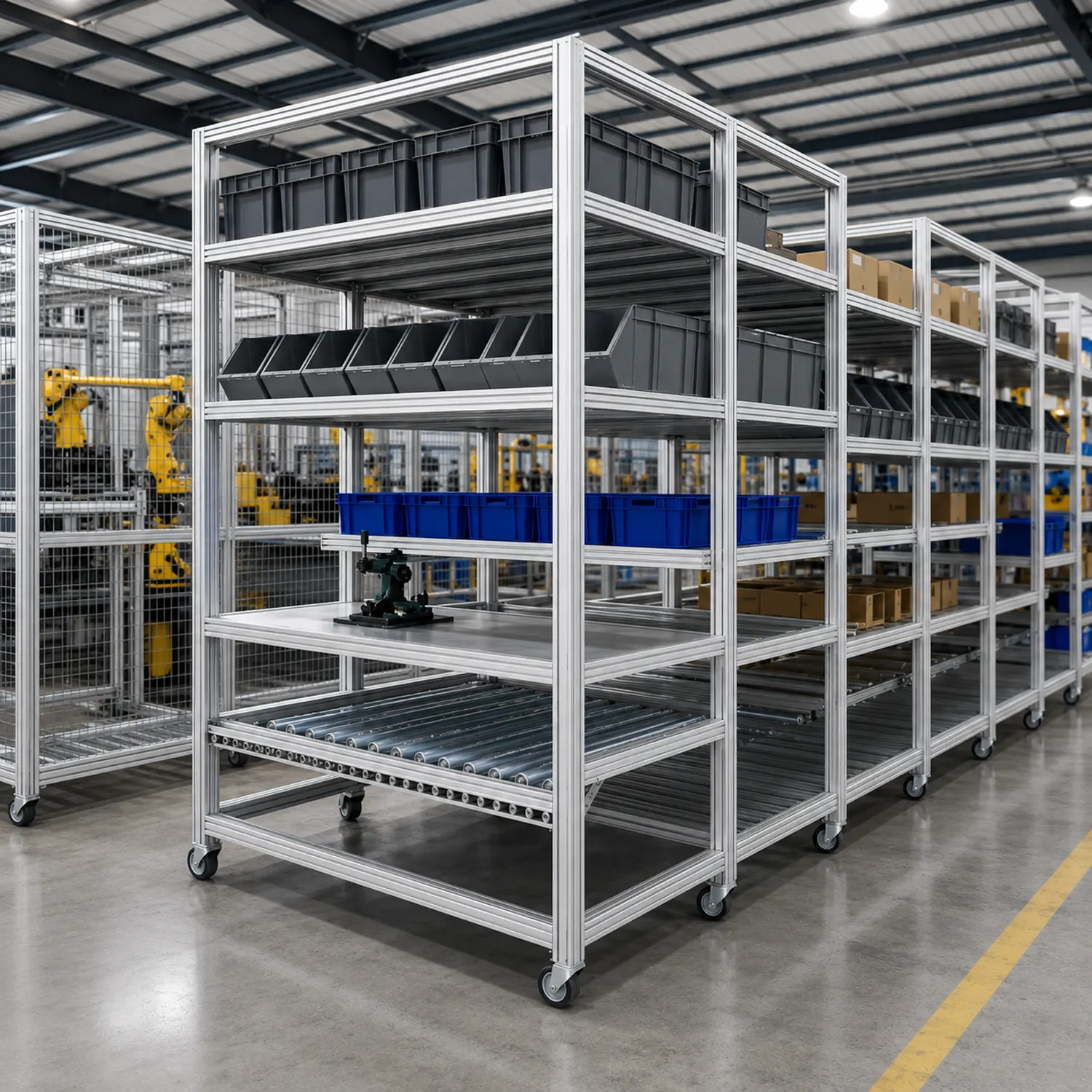
When designing industrial machinery, production lines, workstations, safety guarding or automation systems, one of the first questions engineers ask is: are aluminium profiles strong enough for industrial use?
The answer is yes. Modern aluminium extrusion systems are widely used across manufacturing, engineering, automation and industrial environments because they combine high strength, flexibility, corrosion resistance and fast assembly. With the correct profile size, load calculations and connection methods, aluminium profiles can create extremely strong structures capable of supporting heavy equipment, machinery and production processes.
Valuframe is one of the UK’s leading online suppliers of aluminium extrusion profiles, T-slot aluminium profiles and modular framing components, providing businesses, engineers and manufacturers with everything needed to build custom industrial solutions.
From machine frames and conveyor systems to workbenches, guarding, robotics enclosures and production lines, Valuframe aluminium profiles provide a versatile alternative to traditional steel fabrication.
Table of Contents
- Why Aluminium Profiles Are Used in Industry
- Understanding Aluminium Profile Strength
- Choosing the Correct Aluminium Profile Dimensions
- Calculating Load Requirements
- Selecting the Right Aluminium Extrusion Profile
- Aluminium Profile Assembly Methods
- Essential Aluminium Profile Components
- Industrial Applications for Aluminium Profiles
- Why Choose Valuframe?
Why Aluminium Profiles Are Used in Industry
Aluminium extrusion profiles have become a standard building material in modern industrial environments. Unlike traditional welded steel structures, aluminium framing systems allow engineers to create strong, adaptable structures without the need for specialist fabrication equipment.
The main advantages of using aluminium profiles include:
- High strength-to-weight ratio – aluminium provides excellent structural performance while remaining lightweight.
- Modular construction – profiles can be quickly assembled, modified or expanded.
- No welding required – reducing manufacturing time and installation costs.
- Corrosion resistance – ideal for clean environments and industrial applications.
- Professional appearance – anodised aluminium creates a clean, modern finish.
- Reusable components – structures can be dismantled and redesigned as requirements change.
This flexibility makes aluminium extrusion systems suitable for almost any industry, including manufacturing, automotive, electronics, packaging, food production, robotics and automation.
Understanding Aluminium Profile Strength
The strength of an aluminium profile depends on several factors, including:
- Profile dimensions
- Wall thickness
- Aluminium alloy used
- Span length
- Load position
- Type of connectors used
- Overall frame design
A common misconception is that aluminium profiles are not strong enough for industrial applications because they are lightweight compared with steel. However, the unique hollow construction of aluminium extrusion profiles provides excellent rigidity while keeping weight low.
For example, a correctly selected T-slot aluminium extrusion can support heavy machinery, conveyors, safety guards and production equipment when designed correctly.
The key is not simply choosing the largest profile available. The correct approach is selecting the right aluminium extrusion size based on the application requirements.
Choosing the Correct Aluminium Profile Dimensions
The first step when designing an aluminium structure is defining the required dimensions.
Common aluminium extrusion sizes include:
| Profile Size | Typical Applications |
|---|---|
| 20mm Aluminium Profile | Light-duty frames, displays and small assemblies |
| 30mm Aluminium Profile | Compact machine frames, guards and workstations |
| 40mm Aluminium Profile | General industrial structures, benches and automation frames |
| 45mm Aluminium Profile | Medium-duty industrial applications |
| 50mm+ Aluminium Profile | Heavy-duty machine bases and production systems |
When selecting dimensions, consider:
- The overall size of the structure
- The distance between supports
- The expected weight being carried
- Whether the frame experiences movement or vibration
- Future expansion requirements
Choosing the correct aluminium extrusion size from the beginning ensures a strong, safe and cost-effective solution.
Calculating Load Requirements
Before selecting aluminium profiles, it is important to understand the loads involved.
Industrial aluminium framing may need to support:
- Machinery and equipment
- Conveyor systems
- Work surfaces
- Electrical cabinets
- Safety guarding panels
- Robotic equipment
- Operator stations
Engineers should consider both static loads and dynamic loads.
A static load is a fixed weight, such as a machine mounted onto a frame. A dynamic load includes movement, vibration or repeated forces, such as conveyors or automated machinery.
Using a larger aluminium profile, reducing unsupported spans and adding additional supports can significantly increase structural strength.
Selecting the Right Aluminium Extrusion Profile
Valuframe supplies a wide range of T-slot aluminium extrusion profiles designed for industrial applications.
The most popular systems include:
- Series 5 aluminium profiles – ideal for general industrial framing.
- Series 6 aluminium profiles – offering increased strength for heavier applications.
- Series 8 aluminium profiles – designed for large structures requiring maximum rigidity.
The modular T-slot design allows components to be positioned anywhere along the profile, making adjustments simple without drilling or welding.
This makes aluminium extrusion ideal for businesses that need flexible manufacturing systems that can adapt as production requirements change.
Aluminium Profile Assembly Methods
One of the biggest advantages of aluminium framing systems is the simplicity of assembly.
Unlike welded steel structures, aluminium profiles can be assembled using mechanical fixing methods, allowing rapid installation and easy modification.
Slot Nuts and T Nuts
T-slot nuts and slot nuts slide into the profile channel, allowing bolts and fasteners to be positioned anywhere along the extrusion.
Benefits include:
- Adjustable fixing points
- No machining required
- Easy repositioning
- Strong mechanical connections
Connectors and Joining Brackets
Aluminium profile connectors provide secure joints between sections.
Common options include:
- 90-degree corner brackets
- Internal connectors
- Hidden connectors
- Joining plates
- Angle brackets
The correct connector choice ensures maximum rigidity and stability.
Essential Aluminium Profile Components
A complete aluminium extrusion system requires more than just profiles. Valuframe supplies a wide range of components to create complete industrial structures.
Castors
Heavy-duty castors allow production equipment, workstations and assembly frames to become mobile. Locking castors provide stability while allowing easy repositioning when required.
Adjustable Feet
Aluminium profile feet provide stable support for machine frames, benches and production equipment. Adjustable levelling feet help compensate for uneven floors.
End Caps
Plastic end caps provide a professional finish while protecting exposed profile ends from dirt, damage and sharp edges.
Panels and Accessories
Additional components such as brackets, hinges, handles, doors and panels allow aluminium profiles to be transformed into complete machine guards, enclosures and operator stations.
Industrial Applications for Aluminium Profiles
The versatility of aluminium extrusion systems means they are used across countless industries.
Typical applications include:
- Machine frames
- Production lines
- Assembly stations
- Lean manufacturing workstations
- Conveyor systems
- Safety guarding
- Robot cells
- Automation equipment
- Storage racks
- Testing rigs
- Display systems
Whether creating a single workstation or an entire factory production line, aluminium profiles provide a scalable and efficient solution.
Why Choose Valuframe for Aluminium Profiles?
When sourcing aluminium extrusion systems, choosing a reliable supplier is essential.
Valuframe provides businesses across the UK with high-quality aluminium profiles and components available online, making it easier than ever to design and build custom industrial solutions.
With a comprehensive range of:
- Aluminium extrusion profiles
- T-slot aluminium systems
- Connectors
- Fasteners
- Slot nuts
- Castors
- Feet
- End caps
- Assembly accessories
Valuframe helps engineers, manufacturers and businesses create professional, reliable and adaptable structures without the time and cost associated with traditional fabrication.
From a simple aluminium workstation to a complete automated production line, Valuframe aluminium profiles provide the strength, flexibility and reliability modern industry demands.
Explore the full range of aluminium extrusion profiles and industrial framing components from Valuframe today and start building your next project.